Are Contactors and Circuit Breakers the Same?
April 21, 2026

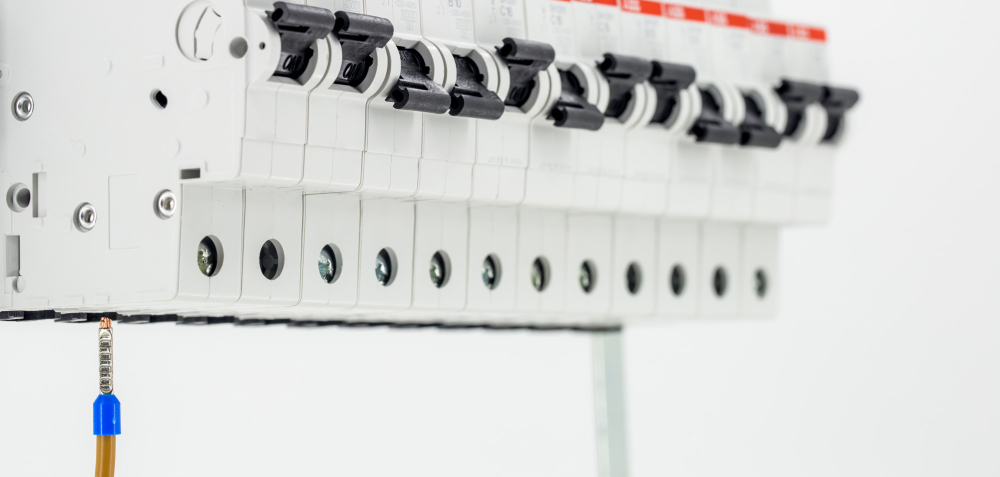
If you work around electrical panels, switchboards, or marine automation systems, you have almost certainly seen both contactors and circuit breakers mounted side by side in the same enclosure. They can look similar at a glance. Some people even use the terms interchangeably. But they are not the same device, and confusing the two can lead to improper equipment selection, failed installations, or worse, a safety hazard on your vessel or plant floor.
Let's break it down clearly so you know exactly what each device does, when to use which, and why the distinction matters in real-world applications.
A contactor is an electrically controlled switching device used to repeatedly make and break an electrical circuit under load. It is designed for high-frequency switching, meaning it can open and close a circuit thousands of times over its service life.
Contactors are operated by a control coil. When voltage is applied to the coil, an electromagnetic force pulls the contacts closed, completing the circuit. When the coil is de-energized, a spring returns the contacts to the open position.
Here is what makes contactors stand out:
In marine electrical systems, contactors appear in motor control centers, thruster control panels, winch systems, and pump automation circuits. They are workhorses, not protectors.
A circuit breaker is a protective switching device designed to automatically interrupt a circuit when it detects a fault condition, such as overcurrent, short circuit, or in some types, ground fault or arc fault conditions.
Unlike a contactor, a circuit breaker does not rely on an external signal to operate. It monitors the current flowing through it and trips on its own when that current exceeds a preset threshold.
Here is what defines a circuit breaker:
On ships and offshore platforms, circuit breakers protect feeders, distribution panels, generator outputs, and critical navigation or automation circuits. Their job is to prevent electrical fires and equipment damage.
No. Contactors and circuit breakers serve different purposes and are built differently.
Here is a side-by-side comparison:
Feature
Contactor
Circuit Breaker
Primary function
Switching / control
Protection
Operates automatically on fault?
No
Yes
Designed for frequent switching?
Yes
No
Built-in overload protection?
No (unless paired with overload relay)
Yes
Operated by
Control coil (electromagnetic)
Thermal, magnetic, or electronic trip
Typical application
Motor control, automation
Feeder protection, panel distribution
Resettable?
N/A (not a protective device)
Yes
The confusion often arises because both devices contain contacts that open and close to interrupt current flow. The mechanism and intent, though, are completely different.
In many real-world motor control applications, a contactor and a circuit breaker are used together in the same circuit. Here is how that works in practice:
This combination forms what is commonly called a motor starter. Each component handles a specific job, and together they give you both control and protection.
Trying to use a circuit breaker as a contactor is a bad idea. Breakers are not rated for repeated on/off duty cycles and will wear out or fail prematurely. Trying to use a contactor without a protective device upstream leaves your wiring and equipment exposed to fault currents that the contactor cannot safely interrupt.
Know More : Contactors and Circuit Breakers
One technical distinction worth understanding is interrupting capacity, sometimes called breaking capacity or short-circuit withstand rating.
Circuit breakers are rated to interrupt very high fault currents safely, often tens of thousands of amperes (expressed as kA). They are built with arc chutes and other mechanisms specifically to extinguish the arc that forms when a high-current circuit opens.
Contactors, by contrast, are rated for their normal load current, not for fault interruption. If a short circuit occurs and the contactor opens under those conditions, the resulting arc can weld the contacts together or destroy the device.
This is exactly why circuit breakers are placed upstream of contactors in properly designed control panels.
Not all contactors are the same. AC contactors are the most common, used for three-phase motor circuits and lighting loads. DC contactors are used in battery systems, cranes, and electric propulsion systems where direct current is present.
Vacuum contactors are worth mentioning separately. They interrupt the circuit in a vacuum chamber, which suppresses the arc very effectively. These are common in medium-voltage marine switchgear and generator control panels where switching must happen cleanly and reliably.
Capacitor-switching contactors are a specialized variant used to switch power factor correction banks. They include resistors or inductors to limit the inrush current spike that occurs when capacitors connect to the bus.
Molded Case Circuit Breakers (MCCBs) are the most common type in marine distribution systems. They are compact, self-contained units available from about 15 A up to several thousand amperes.
Air Circuit Breakers (ACBs) are used for main switchboard feeder protection and generator breakers. They are larger, more adjustable, and designed for very high fault levels.
Miniature Circuit Breakers (MCBs) protect smaller branch circuits, lighting panels, and control circuits. They typically top out around 125 A.
Residual Current Circuit Breakers (RCCBs or GFCIs) detect leakage current to ground and trip to prevent electric shock. These are particularly relevant in marine accommodation areas and shore power connections.
At Marine Automation & Navigation Solutions, the team works extensively with marine switchgear components including contactors, circuit breakers, and motor control equipment across a wide range of vessels and fleet types.
Getting the selection wrong costs money and can create safety problems. Here are the practical rules:
Use a contactor when:
Use a circuit breaker when:
Use both together when:
The IEC standard 60947 covers low-voltage switchgear and controlgear and provides the classification framework for both contactors (IEC 60947-4-1) and circuit breakers (IEC 60947-2). For marine applications, class society rules from organizations like DNV, Lloyd's Register, and Bureau Veritas add requirements on top of IEC standards.
On a vessel, an electrical failure is not just an inconvenience. It can affect propulsion, navigation, fire detection, bilge pumping, and crew safety systems. Selecting the correct protective and switching devices for each circuit is not optional, it is a classification and safety requirement.
Marine environments also add corrosion, vibration, humidity, and salt spray to the equation. Contactors and circuit breakers used on ships need to be rated for the marine environment, typically IP-rated enclosures and corrosion-resistant materials.
When troubleshooting marine electrical panels, it helps to quickly identify what each device is doing. A tripped breaker tells you there was a fault. A contactor that is not closing tells you there is a control circuit problem, not necessarily a power fault.
The team at Marine Automation & Navigation Solutions has been helping vessel operators and fleet managers source, repair, and commission marine electrical and automation components since 2020 from their base in Dubai's Jebel Ali Freezone. Understanding the distinction between protective devices and control devices is something that comes up constantly in this kind of work.
Q1: Can a contactor replace a circuit breaker in a marine panel?
No. A contactor is a switching device, not a protective one. It has no ability to automatically detect or interrupt fault currents. Replacing a circuit breaker with a contactor removes the overcurrent protection from the circuit, which creates a serious fire and equipment damage risk.
Q2: Why do contactors and circuit breakers sometimes look the same from the outside?
Both devices use a similar housing shape and have terminals for line and load connections. The difference is internal. Circuit breakers contain trip mechanisms like bimetal strips and magnetic coils, while contactors contain an electromagnetic coil and main contacts designed for high-cycle switching duty.
Q3: What happens if I use a circuit breaker for frequent switching instead of a contactor?
Circuit breakers wear out quickly under frequent switching conditions. They are mechanically rated for far fewer operations than contactors. Using a breaker for motor switching will cause premature contact erosion, potential tripping problems, and eventual failure. Always use a contactor for repetitive switching applications.
Q4: Do I need both a contactor and a circuit breaker to run a motor?
In most properly designed systems, yes. The circuit breaker protects the wiring from fault currents, while the contactor handles the actual start/stop switching. An overload relay is typically added to protect the motor from sustained overcurrent. Together, these form a complete motor starter assembly.
Q5: What is the difference between a contactor and a motor starter?
A motor starter is an assembly that includes a contactor plus an overload relay. The contactor does the switching; the overload relay provides thermal protection against sustained overcurrent that could overheat the motor windings. Some manufacturers sell these as pre-assembled units, while others supply the components separately for panel builders.