Difference Between Magnetic Contactor and Circuit Breaker
April 21, 2026

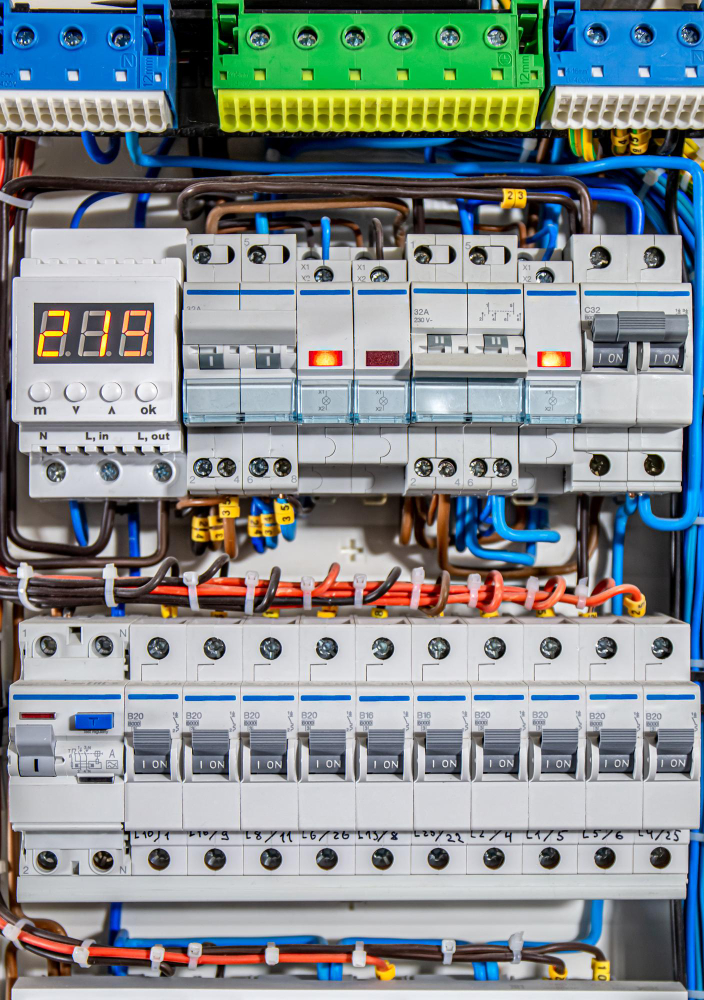
If you work around electrical panels, motor control centers, or marine switchboards, you've almost certainly stared at both a magnetic contactor and a circuit breaker sitting side by side and wondered do these two things do the same job, or are they completely different animals?
Short answer: they are fundamentally different, and using one where you need the other can cost you equipment, time, and in worst-case marine scenarios, the vessel itself.
Let's break it down.
A magnetic contactor is an electrically controlled switch. Feed it a control voltage (often 24V DC, 110V AC, or 230V AC depending on the coil rating), and an electromagnet pulls a set of contacts closed. Cut that control voltage, and a return spring snaps the contacts open again.
That's the core of it. The contactor exists to switch a load on and off repeatedly, sometimes hundreds of times a day under the command of a control system, a timer relay, a PLC, or a start button pressed by an operator.
Contactors are built for this kind of repetitive switching. Their contacts are designed to handle the inrush current that a motor draws at startup, which can be 6 to 8 times the motor's full-load current. The contacts are also replaceable, which makes them maintenance-friendly in industrial and marine environments where wear is expected.
Contactors are almost always paired with a separate overload relay or a motor protection relay to form what the industry calls a motor starter. That combination gives you both switching control and thermal protection.
A circuit breaker is a protective device. Its job is to detect abnormal electrical conditions, specifically overcurrent, short circuits, and sometimes ground faults and interrupt the circuit before those conditions damage equipment or start a fire.
Unlike a contactor, a circuit breaker is not designed to be switched on and off frequently as part of normal operations. It's a safe backstop. You hope it never trips. When it does trip, it's telling you something is wrong with the circuit.
Circuit breakers achieve interruption through two main mechanisms: a thermal element (a bimetal strip that heats up under sustained overload) and a magnetic element (an electromagnet that reacts almost instantly to short-circuit current). Together these are called a thermal-magnetic circuit breaker, which is the most common type in marine and industrial panels.
Molded Case Circuit Breakers (MCCBs) and Miniature Circuit Breakers (MCBs) are governed by standards like IEC 60947-2 and UL 489, which define their interrupting capacity, trip characteristics, and endurance ratings.
Here is where most of the confusion lives. People see that both devices can open and close an electrical circuit, and they assume the functions overlap. They don't at least not the way people think.
Feature
Magnetic Contactor
Circuit Breaker
Primary function
Switching (control)
Protection
Operates
Via control signal (coil voltage)
Automatically on fault
Overcurrent protection
No (requires add-on relay)
Yes (built-in)
Short-circuit protection
No
Yes
Switching frequency
Very high (millions of cycles)
Low (hundreds to thousands)
Controlled by
PLC, relay, push button
Itself (automatic)
Typical application
Motor starting, load switching
Feeder protection, panel protection
Fail-safe behavior
Opens on loss of control power
Remains in last position
Replaceability
Contacts replaceable
Unit typically replaced after fault
The short version: a contactor controls when a load runs. A circuit breaker protects the circuit when something goes wrong.
Know More : Contactors and Circuit Breakers
This is the part that trips up engineers and technicians new to motor control design.
A contractor alone gives you no protection. If your motor overheats because of a jammed pump, the contactor stays closed, it has no way of knowing there's a problem. The motor windings burn.
A circuit breaker alone gives you no practical on/off control. You could technically use it as a switch, but it's not rated for that duty cycle, and tripping a breaker repeatedly as part of normal operations degrades its trip mechanism over time.
The correct solution is both. A typical motor starter circuit looks like this:
This three-device combination covers isolation, switching, and overload protection in a way that no single device can.
Marine environments add layers of complexity that land-based installations don't face. Salt air accelerates corrosion on contact surfaces. Vibration from engines and seas can cause contact bounce or loose terminal connections. Temperature swings affect thermal trip calibration. And classification societies Lloyd's Register, Bureau Veritas, DNV, and others have specific requirements for electrical components used on vessels.
For marine motor control applications, contactors must typically be rated for the ambient temperature range on board and selected with appropriate IP (Ingress Protection) ratings for the installation location. Engine room switchboards often require IP44 or IP54 rated enclosures at minimum.
Circuit breakers on vessels must carry the appropriate type approval from a recognized classification body. Their interrupting capacity (the maximum short-circuit current they can safely clear) must be matched against the prospective short-circuit current at the point of installation, something that requires a proper fault level study.
At Marine Automation & Navigation Solutions, the team works with electrical, automation, and control systems across vessels of varying ages and configurations. Their work includes not just supply of components but also repair and commissioning services which means they regularly deal with the real-world consequences of mismatched or degraded electrical components on working vessels.
Using a circuit breaker as a motor switch. Some panels, especially on older or budget-built vessels, use a breaker to start and stop a motor. The breaker trips on motor startup inrush (nuisance tripping) or wears out prematurely from the switching duty.
Installing a contactor without overcurrent protection. A contactor without an overload relay is a motor with no thermal protection. One blocked pump or seized bearing, and you're rewinding motor coils.
Mismatching voltage ratings. A contactor rated for AC use only can be damaged by DC switching and vice versa. Always check the contactor's utilization category (AC-1, AC-2, AC-3, AC-4 per IEC standards).
Ignoring the making and breaking capacity of contactors. Not all contactors handle the same inrush levels. A contactor selected for a resistive load (AC-1 duty) will degrade quickly on a motor load (AC-3 duty) because the inrush characteristics are completely different.
Skipping the fault level check on circuit breaker selection. A breaker with insufficient interrupting capacity can rupture rather than safely clear a fault, a serious safety hazard on any vessel.
Use a magnetic contactor when:
Use a circuit breaker when:
Use both when:
Contactors wear out through a predictable mechanism: the contacts arc each time the circuit makes and breaks under load. That arc erodes the contact material over time. Maintenance teams should check contact gap and contact thickness regularly, especially on high-cycle applications like ballast pumps, cargo pumps, or HVAC compressors.
Circuit breakers require less routine maintenance but should be periodically exercised (opened and closed manually) to prevent the mechanism from seizing. On vessels that go into layup, breakers that sit in one position for months can develop oxide layers on contacts and mechanisms that stiffen. Trip testing with a calibrated test set is the only way to confirm a breaker will operate correctly when needed.
The team at Marine Automation & Navigation Solutions provides repair and commissioning services that cover both types of equipment including sourcing genuine spare contacts for contactors and coordinating test and certification for breakers on classified vessels.
1. Can a magnetic contactor replace a circuit breaker?
No. A contactor switches loads on and off but offers no protection against overcurrent or short circuits. Without a circuit breaker or fuse upstream, a fault on the load side can cause serious damage. The two devices serve entirely different roles and work best together.
2. Can a circuit breaker be used to switch a motor on and off daily?
It's not recommended. Circuit breakers are designed for a limited number of operations typically a few thousand over their lifetime. Frequent switching for motor control will wear out the mechanism far sooner than intended and may affect the accuracy of the trip mechanism.
3. What is the difference between a contactor and a motor starter?
A contactor is just the switching element. A motor starter is the complete assembly typically a contactor combined with a thermal or electronic overload relay that provides both switching and motor protection in one package.
4. Why does a contractor need a separate overload relay?
A contactor's contacts simply open or close; they don't measure current. An overload relay monitors motor current and trips the contactor's control circuit if the current stays too high for too long, protecting the motor from heat damage due to overload conditions.
5. How do I know what size contactor to select for my motor?
Start with the motor's full-load current (FLC) from its nameplate. Select a contactor with a current rating at or above the FLC for the appropriate utilization category AC-3 for standard squirrel-cage induction motors. Then set the overload relay to the motor's FLC. Always cross-check with the manufacturer's selection guide for the specific contactor range.